Preserving the stories that made you
Every family has a box somewhere.
A collection of black-and-white prints tied with string. Wedding portraits tucked into drawers. Holiday snapshots from the ’70s. Letters written in careful handwriting. Names fading on the back of photographs. These fragments tell the story of where you come from. But unless they are gathered, organized, and preserved, they risk being lost to time.
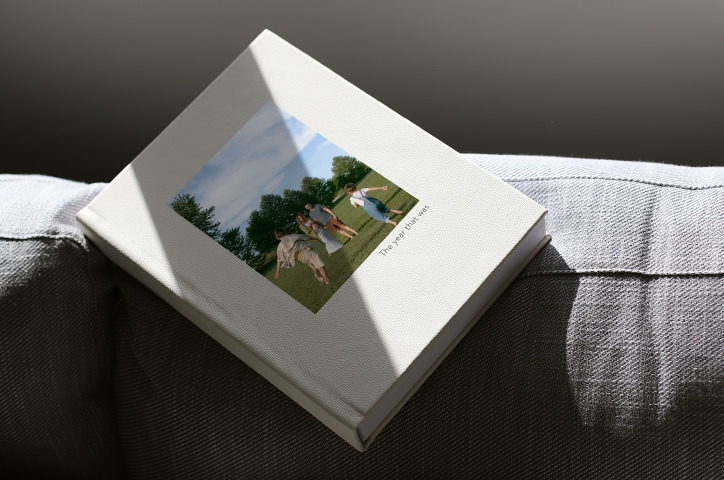
Creating a family history photo book is more than a design project, it’s an act of preservation. It treasures those who came before you and creates something tangible for those who will come after. Whether you choose a timeless Photo Album with thick board pages built for archival longevity, a Photo Book for expansive storytelling, or a Mini Magazine to share with relatives, this guide will walk you step by step from scattered photographs to a finished heirloom.
Preserving the stories that made you
1. Define the scope of your story
2. Gather and digitize your photographs
3. Organize with intention
4. Add context that future generations will understand
5. Choose the right format for your family history
6. Design with restraint
7. Review carefully before printing
1. Define the scope of your story
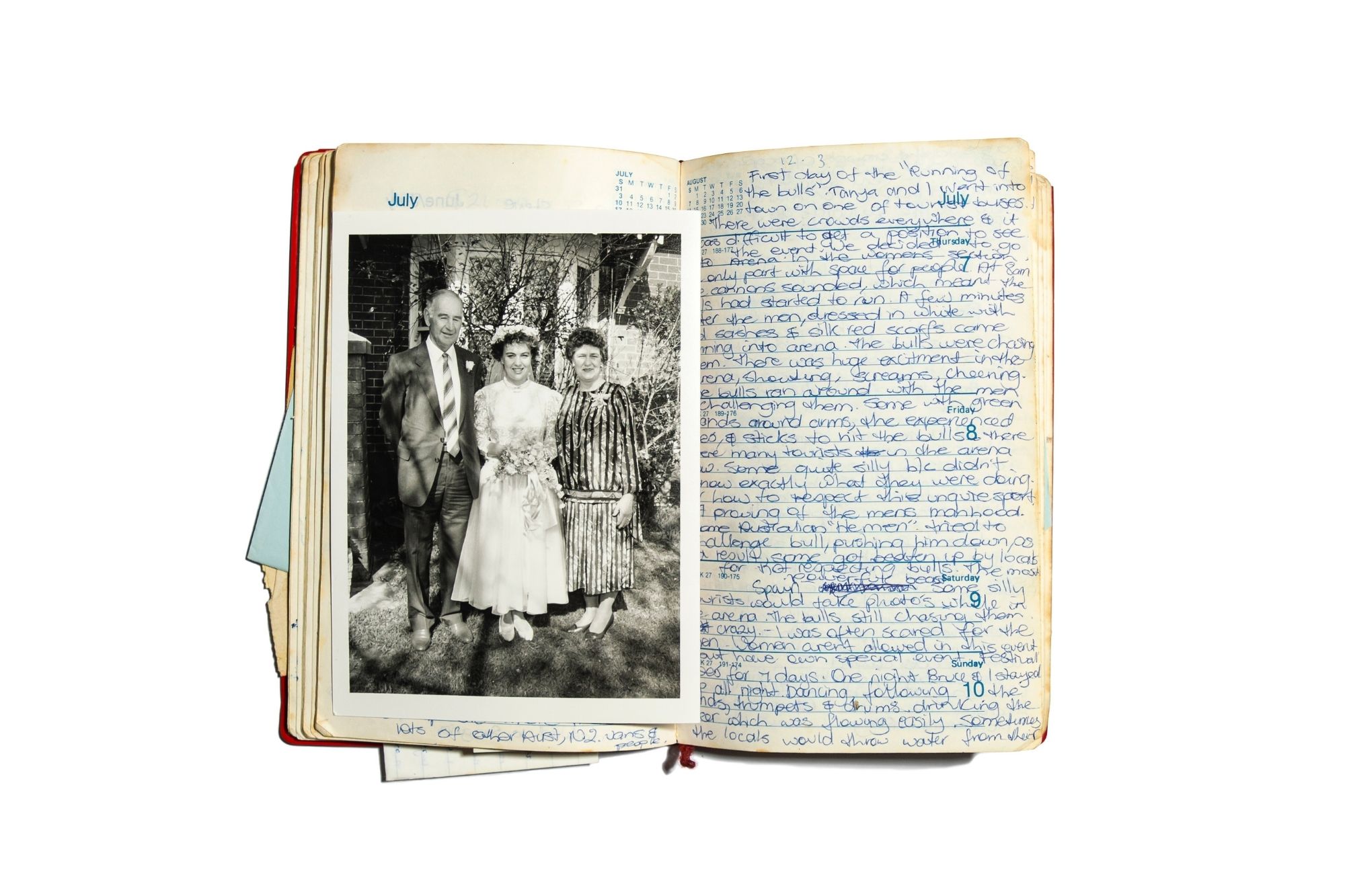
Before scanning a single photograph, pause and decide what family story you want to tell.
Trying to document your entire family history in one volume can quickly become overwhelming. Instead, narrow your focus. You might choose to document:
• One side of the family
• A single generation
• The story of your grandparents’ migration
• A matriarch or patriarch’s life journey
• Major milestones across decades
A focused narrative feels intentional and powerful. It also makes the project more achievable. Ask yourself, what story would I most regret not preserving?
Start there.
2. Gather and digitize your photographs
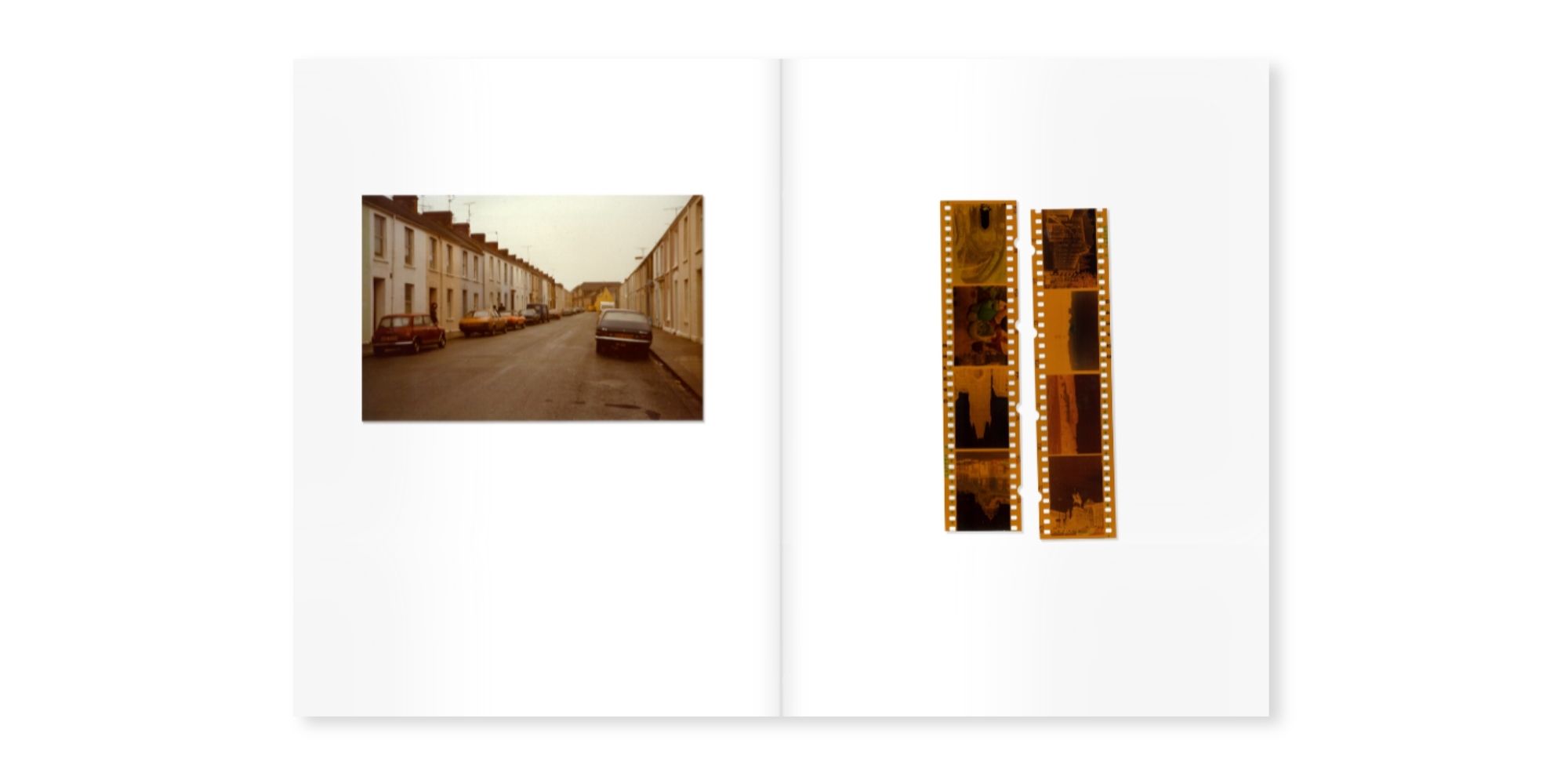
Once your scope is clear, begin gathering materials. Look beyond traditional photo albums. Check, storage boxes, stray envelopes in drawers, framed prints, slides and negatives, letters and documents.
If possible, involve relatives. This stage often unlocks forgotten stories and details. When digitizing:
• Scan at high resolution to preserve quality. Always make sure to save an original version before making any edits
• Avoid over-editing or heavy filters
• Save files with clear names and dates
• Back up everything in at least two places
Digitizing is not about modernizing the images. It is about protecting them for the future.
3. Organize with intention
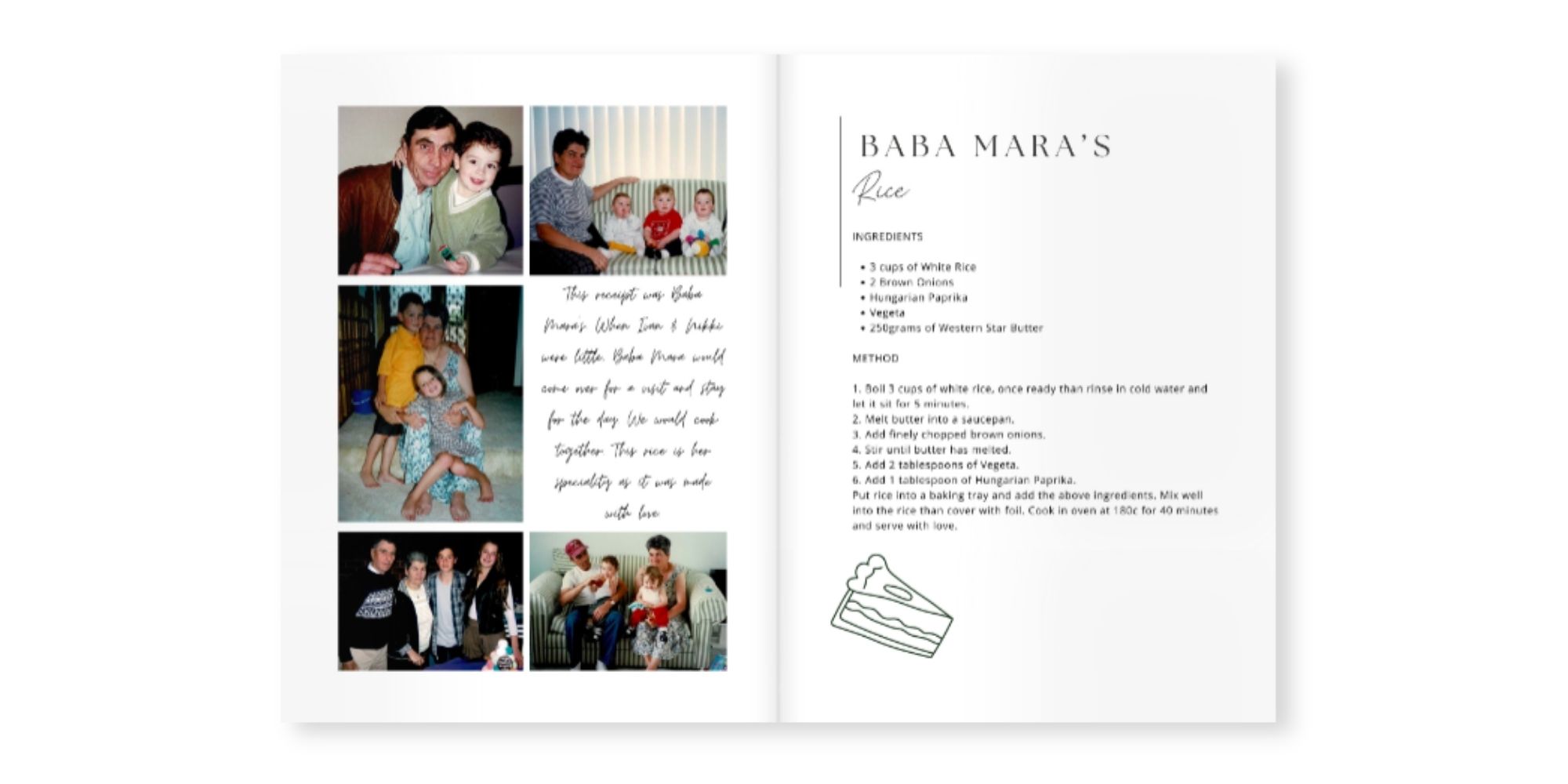
Structure is what transforms a collection of images into an ancestry album. So choose an organizing system that reflects the narrative of your book:
• Chronological - Move through decades or generations in order.
• By family branch - Dedicate sections to different sides of the family.
• By life stage - Childhood, courtship, marriage, parenthood, later years.
• By place - Homes, countries, migration, important locations.
Create folders that mirror your chosen structure before you begin designing. This will save time during layout and help maintain clarity throughout the book.
4. Add context that future generations will understand

A photograph without context slowly loses meaning. “Grandpa” may make sense today. In 70 years, it may not. Where possible include details like, full names, dates of birth or life spans, locations, short anecdotes, cultural or historical references
Even two or three sentences can bring an image to life. Instead of: Summer vacation, 1964. Try: Margaret and Thomas on their first seaside vacation after moving to Chicago, 1964. They had just purchased their first home. Imagine you are writing for people who have not yet been born.
5. Choose the right format for your family history

The format you create your family history book in will shape how your family’s story is experienced, and how it endures.
If your goal is to create a formal, archival keepsake designed to be passed down for generations, a Photo Album offers timeless structure and longevity. With thick, durable pages and a substantial presence, it feels intentional and heirloom-worthy, ideal for preserving carefully curated historical images.
If your project includes a larger collection of photographs, longer written narratives, or immersive double-page spreads, a Premium Photo Book provides greater flexibility. With higher page counts and room for expansive storytelling, it allows you to blend imagery and written history in a beautifully layered way.
And if you would like to share your work more widely, consider creating a Magazine edition as a companion piece. The smaller Mini Magazine format makes a thoughtful gift for siblings, cousins, and wider family. It is a lovely way to reconnect everyone with the story you have preserved.
Choosing the right format ultimately depends on the depth of your archive, the scale of your story, and how you envision your family legacy being held and shared.
6. Design with restraint
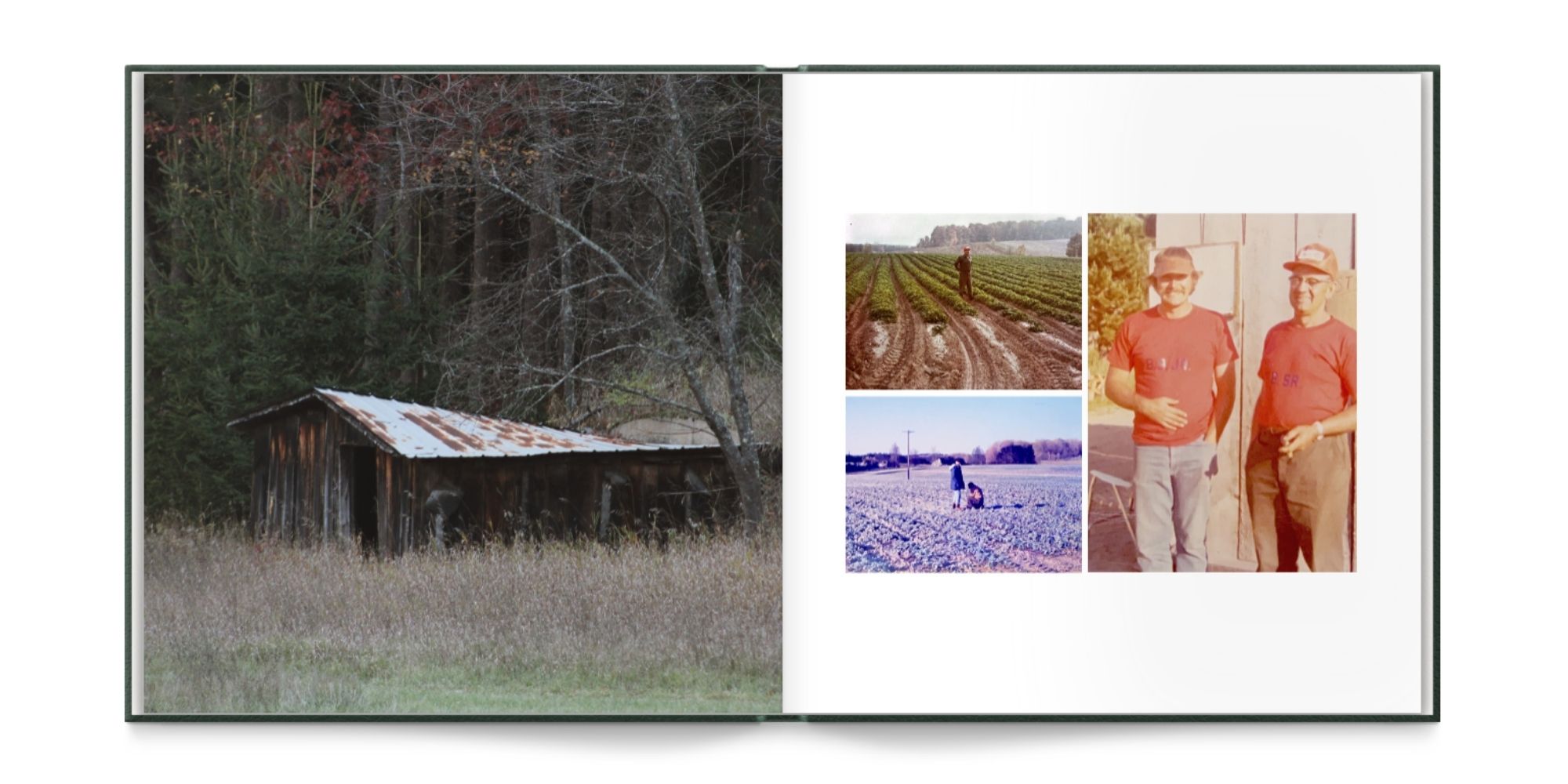
When documenting family history, a thoughtful layout allows the story to take center stage. Choose clean layouts, consistent typography, balanced spacing, and clear section breaks to create a sense of structure and calm. Avoid overcrowding pages with too many images. Instead, allow meaningful photographs to stand alone when they deserve attention.
White space is not empty space. It creates breathing room and signals significance. A well-designed album should quietly support the narrative, never compete with it.
If you prefer guidance, explore our carefully considered Designer Templates, created to bring clarity and elegance to family history projects while keeping the focus exactly where it belongs, on your story.
7. Review carefully before printing
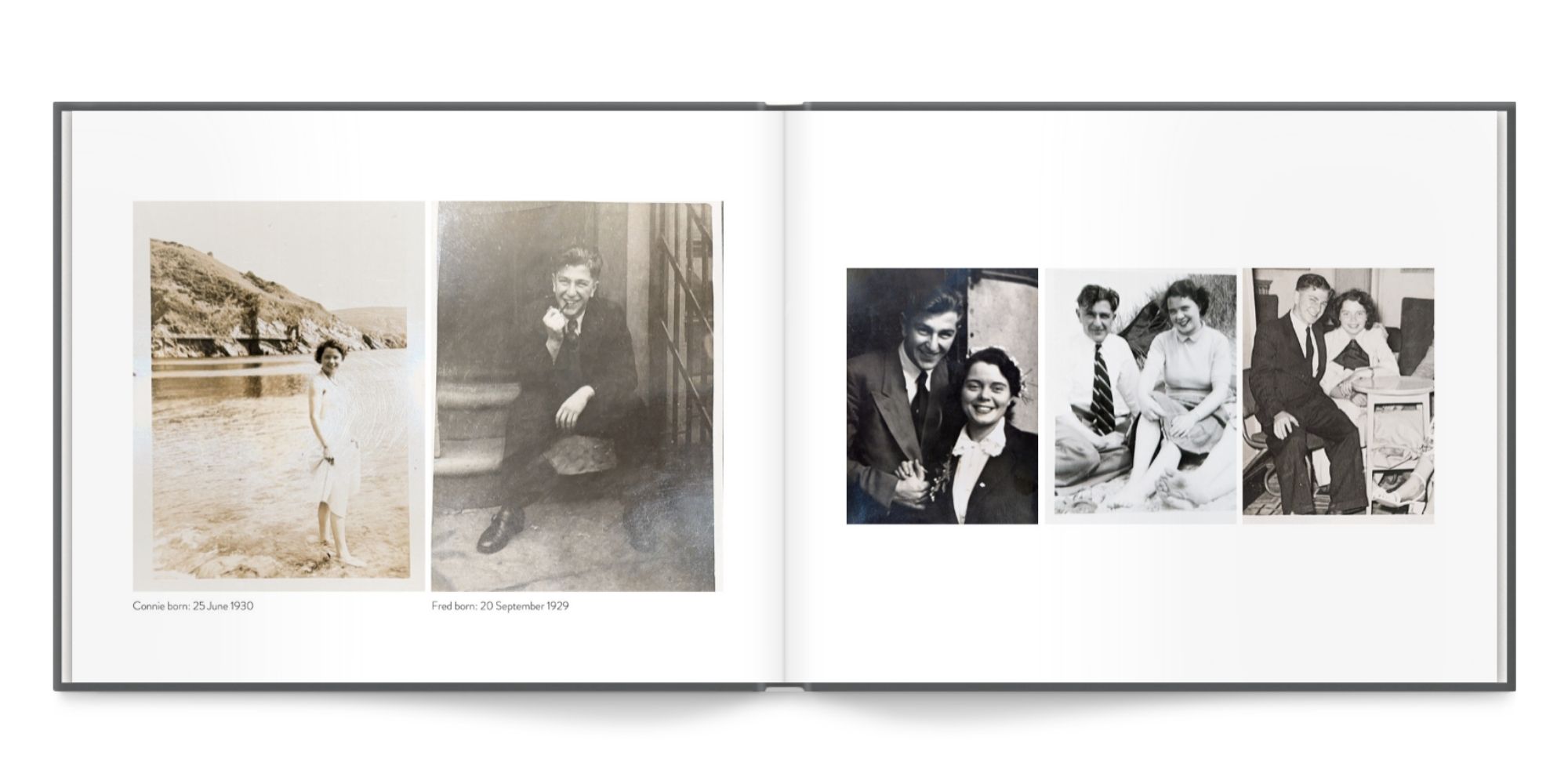
A project of this significance deserves careful attention. Before finalizing, double-check the spelling of names, confirm dates and locations, and consider asking a relative to proofread. Try to make sure images are high resolution, but even if they aren’t (many old photos are not), they are still worth including. Finally, review the page order thoughtfully. Take your time with your family heirloom album; it may become the definitive record of your family’s story.
Creating something that outlives you
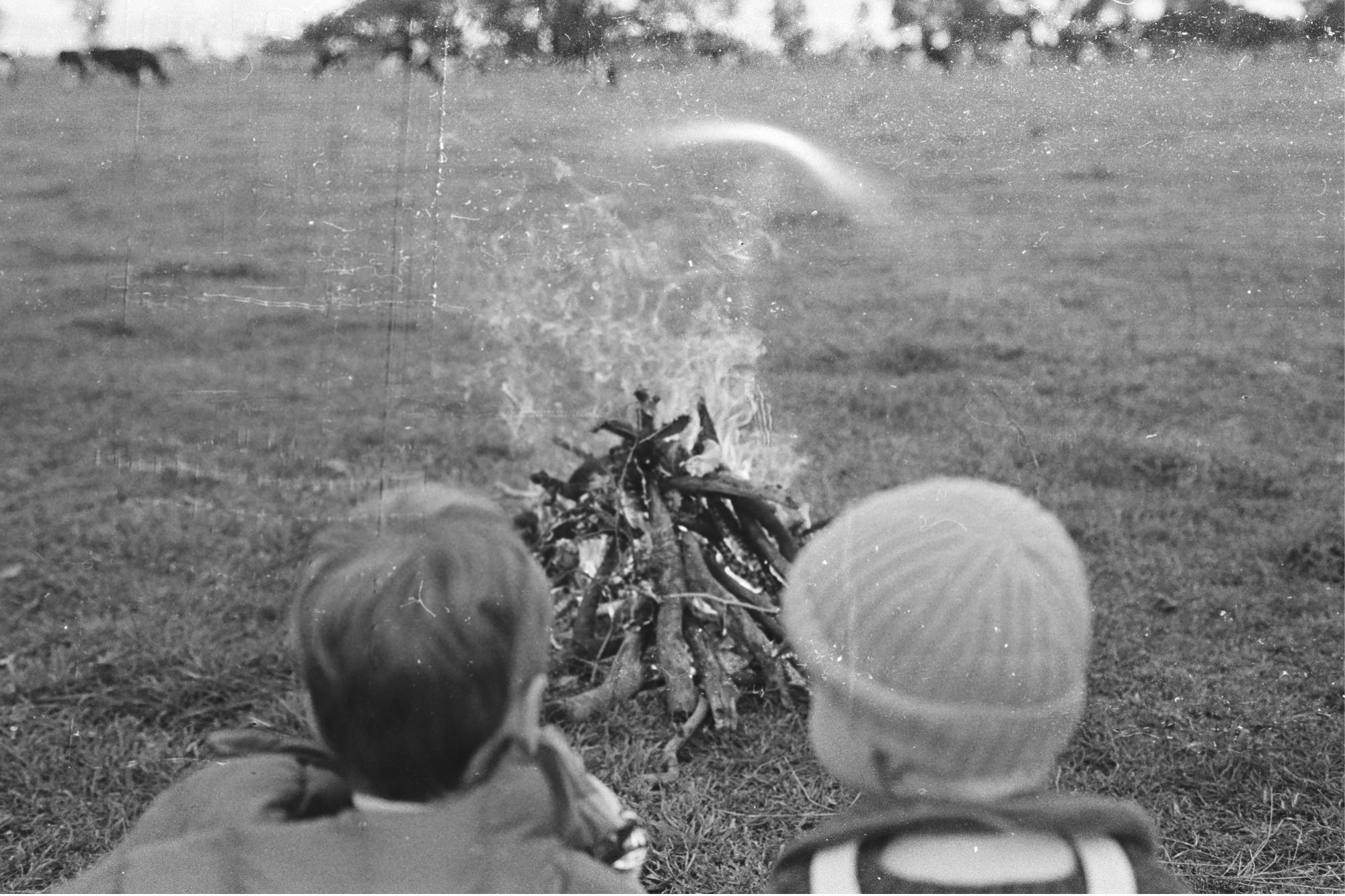
In a digital age, most memories exist as files. Convenient, searchable, but intangible. A family history photo book changes that. It gives weight to stories. It creates a place for reflection. It allows future generations to see faces, read words, and understand where they came from. Long after technology evolves and storage formats change, a beautifully crafted photo album or premium photo book remains.
Something to hold.
Something to revisit.
Something to pass down.
And perhaps one day, someone will open it and feel grateful that you took the time to preserve what mattered.