Discover this age-old bookmaking technique
At MILK Books, we draw on our award-winning publishing heritage and bookmaking expertise to help you create high quality photo books and albums that will be enjoyed for generations. After decades of experience in bookmaking, we use three binding processes – section-sewn binding, lay-flat binding, and PUR binding – to ensure the enduring quality of every MILK memento.
Among these methods, section-sewn binding, used in our Premium Photo Books and Moleskine Photo Books, reflects our commitment to upholding both quality and age-old bookmaking techniques. Discover everything to know about section-sewn binding and why it’s our preferred method.
What is section-sewn binding?
Section-sewn binding is an age-old bookbinding technique that’s still widely used today for its exceptional durability, strength and elegance. Also known as stitched binding, this method involves sections of folded pages, or “signatures”, being bound together with thread. Signatures are then stitched together to form what is called a book block that is glued along the binding edge to securely seal the spine.
This method is vastly different to PUR binding (a popular glue binding method) where pages are held together by glue only. Because each section of pages is individually stitched, section-sewn binding remains strong and flexible even after years of use, and is widely regarded as the most robust and durable bookbinding method available.

1. Bound to last

Unlike a glue-only book binding method, section-sewn offers long-lasting strength. Glue can always deteriorate if not looked after or stored in the incorrect environment, causing pages to loosen or detach over time. With stitched or section-sewn binding, it’s the thread that keeps pages securely bound, ensuring they won’t come undone with age or frequent handling. The longevity of section-sewn binding makes it the method of choice for our Premium Photo Books and Moleskine Photo Books.
2. Crafted with visible thread

When you receive your section-sewn Premium or Moleskine Photo Book, you may notice small details such as tiny holes or visible thread within the gutter. These holes allow the thread to pass through each folded section (signature), with slight variation depending on paper thickness and needle placement. The stitching becomes visible where the thread loops through the centre of each section, securing the pages together. With full-bleed imagery, you may also notice very minor alignment variation, up to 0.7mm per page or 1mm across a spread.
3. Optimal flexibility for easy viewing
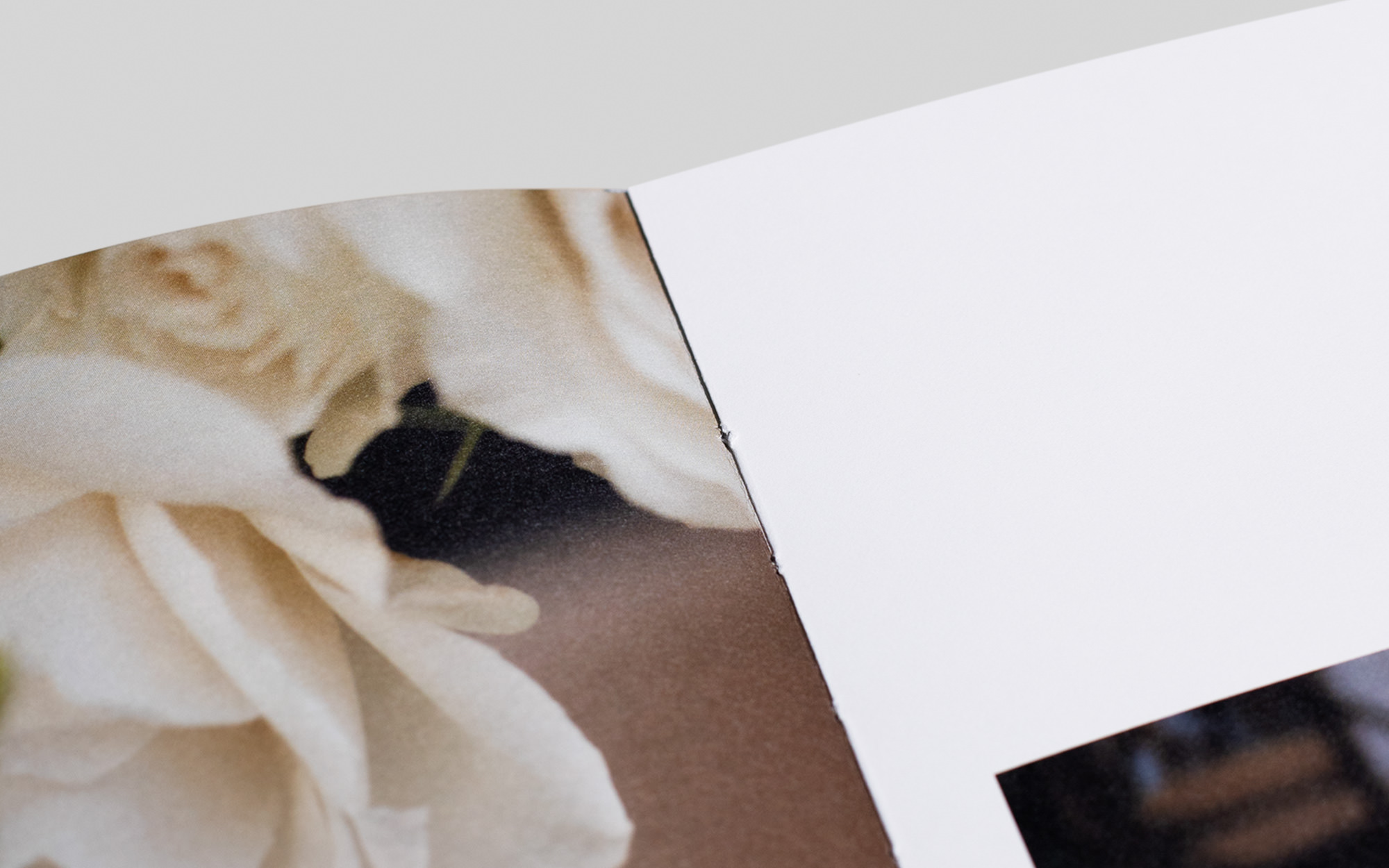
Section-sewn books are designed with a subtle, intentional “give” in the pages. This flexibility allows the book to open comfortably and pages to turn smoothly, even with frequent viewing. Unlike glue-only bindings, which can feel rigid at first, section-sewn binding supports ease of use without compromising the book’s long-term structure.
4. Secure from cover to cover
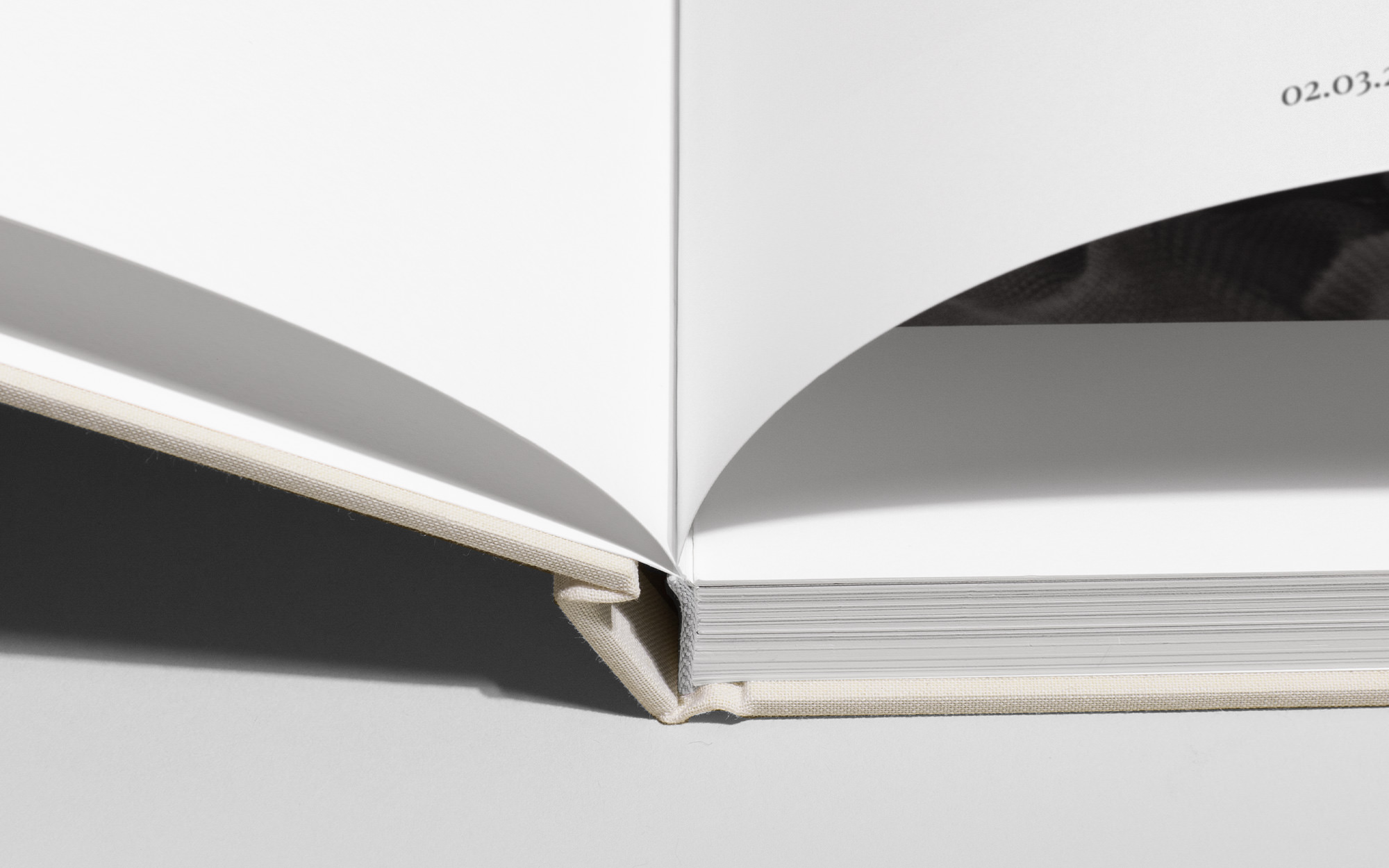
You may notice when opening your book, that the very first and last internal pages feel firmer than the rest. This is because during the casing-in process, the book block (the complete set of a book’s internal pages) is attached to the cover using endpapers, creating a secure connection between the two. This is a standard part of book construction and helps ensure durability. As part of this construction, a narrow strip along the gutter of the first and last pages (around 10mm) is bonded to the endpapers to reinforce the structure. As a result, these few pages won’t lie completely flat when new, but will gradually relax over time. To maintain the strength, shape, and longevity of the binding, it’s best not to press down on them, but instead allow the pages to move naturally.
5. Precision in the details
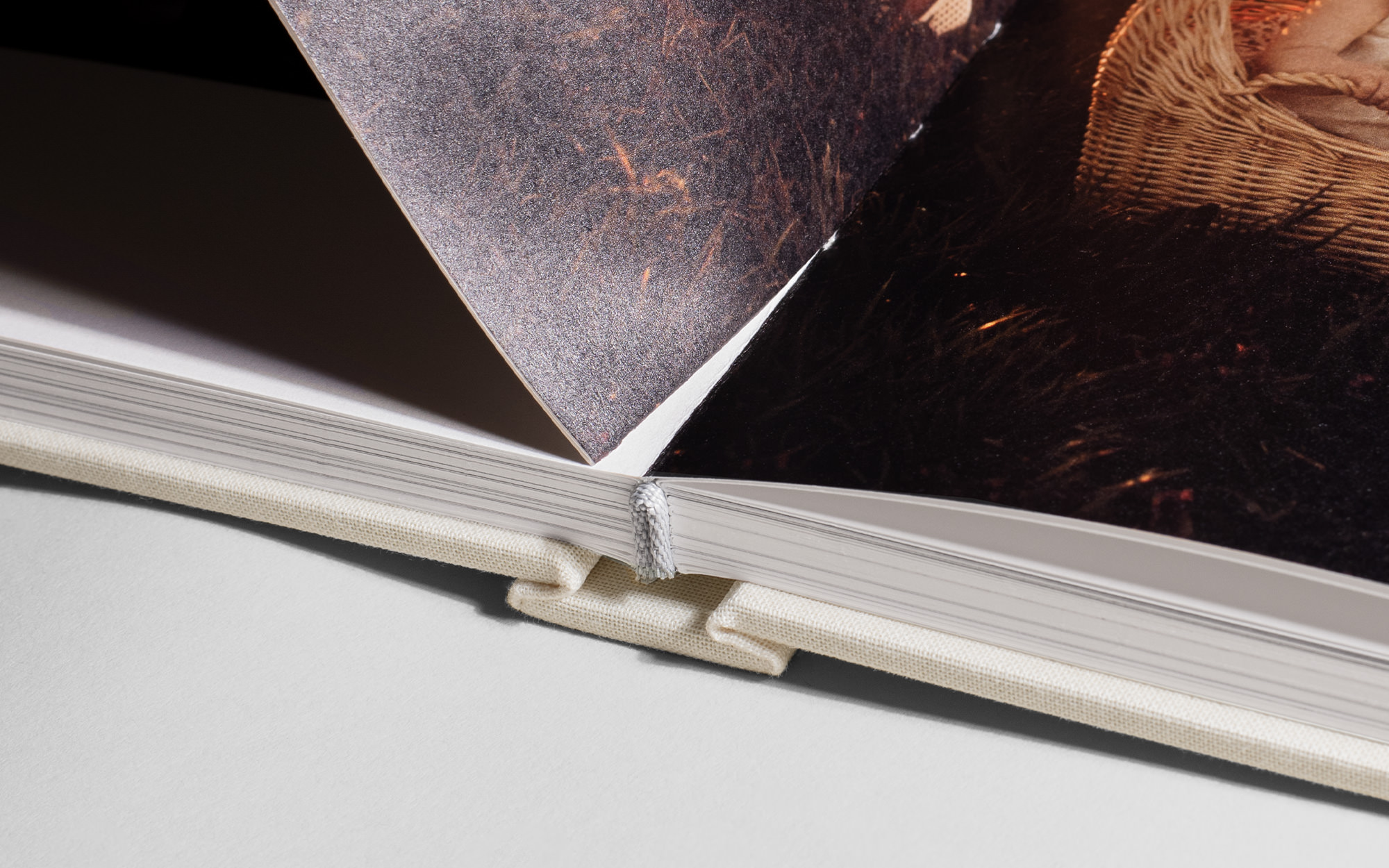
The stitching is intentionally set in from the top and bottom edges of the page rather than running edge to edge. This allows for slight natural movement at the spine, helping pages turn freely and lay near-flat, with minimal bowing. This is a considered and deliberate feature of section-sewn books that reduces strain on the binding while keeping the pages securely bound.
6. Intentional movement at the spine

In our photo books and albums, you may notice some movement in the spine area, as the book block (the bound pages) isn’t glued directly to the spine, instead being attached via the endpapers. This allows the spine to move independently from the pages, so the book can open naturally without placing strain on the stitching. While this may feel different from a fully glued spine, this flexibility is a hallmark of quality bookmaking and helps the book maintain its structure, shape, and durability over time.
7. Near lay-flat experience across all page counts

Another unique feature of section-sewn binding is its near lay-flat capabilities. Premium Photo Books and Moleskine Photo Books when opened will lay almost completely flat regardless of the number of pages. This feature allows you to have your most-loved photos span across a double page-spread with minimal loss of detail to the gutter, unlike PUR bound books with a stiffer construction.
More than just a binding technique, our section-sewn photo books reflect the craft and care we put into our products. For centuries, bookmakers have relied on this method to produce books that withstand regular use while maintaining their quality and integrity. While today’s digital printing and modern technology allows for new, efficient and more cost-effective alternatives, we continue to use this timeless technique to bring customers the best of both tradition and innovation.
For a keepsake that will withstand the test of time and showcase your most-loved memories beautifully, section-sewn binding is a superior choice. Used in our Premium and Moleskine Photo Books, this age-old binding method combines traditional craftsmanship with modern technology, giving you confidence in the durability, quality, and care behind every book, and ensuring your photo memories are made to last for generations.